

Mother’s Day was a week ago, so this is probably a late sentiment — but it’s something I can’t let go of.
In my Bible-in-a-year plan, I’ve been spending a lot of time in the Gospels and just recently hit the Gospel of Luke. As a mom, this gospel resonates with me more than the others, likely because much of it was written as Mary’s biography. Luke is alleged to have actually met with her before beginning his writing. One verse in particular has continued to run through my mind. It’s from Luke 2, when Mary and Joseph arrive at the temple to dedicate Jesus to the Lord. They are confronted by two very devout followers of God — Simeon and Anna — both fairly advanced in years.
This is one of those passages where you have to read between the lines to understand what’s really transpiring. The Temple of Jerusalem was a very busy place, filled with people making offerings for various reasons. Doubtless, Jesus was not the only newborn there that day. But out of all the families present, Simeon and Anna approached Mary and Joseph because they knew — without a doubt — that he was the Messiah.
I imagine that encounter brought some vindication to Mary. At this point, she had received the announcement from Gabriel, confirmation from her elderly and pregnant cousin, a handful of awe-struck shepherds — but now this. Out of all the travelers making pilgrimages that day, Simeon and Anna came to her. It was Simeon’s words that resonate with me most: “This child will be rejected by many others. Thus, the deepest thoughts of many hearts will be revealed. And a sword will pierce your very soul.” (Luke 2:34-35).
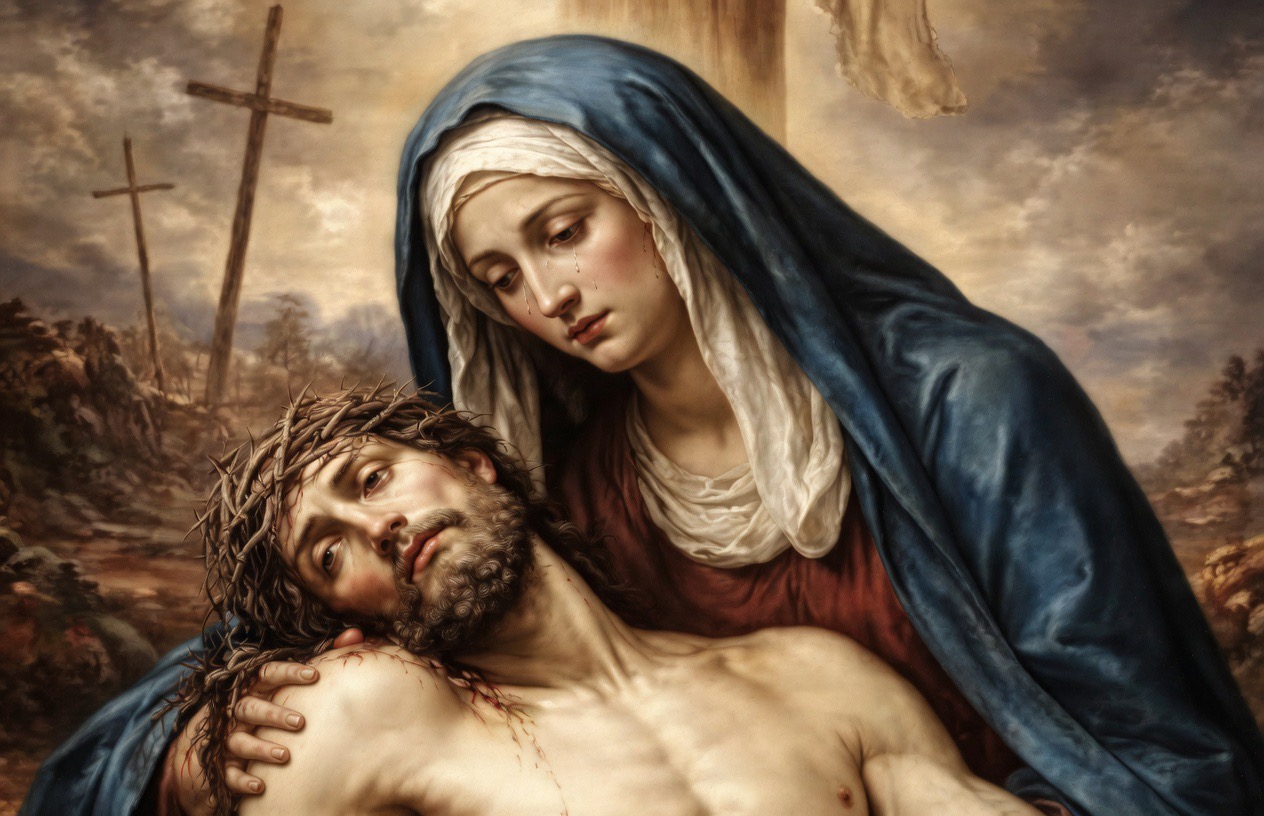
Those words are a haunting omen for a new mother to sit with. I’m sure Mary replayed them frequently throughout her son’s ministry and, ultimately, at his crucifixion. She endured every mother’s worst nightmare — and to a magnitude none of us will ever fully know.
This extraordinary woman was a young, betrothed teenager living in poverty when an angel of the Lord told her she was going to be a mother. The weight of that is astounding. Unwed mothers were among the lowest of the low in that society, and she was certainly aware of what she was risking when she asked Gabriel, “How can this be, since I am a virgin?” But she understood the gravity of her destiny. She believed with such voracious faith in the promise of a Messiah that she accepted the cost without flinching.
From the time of his birth until he was a young man, I’m sure Mary mothered the way most of us do. She fed and cared for her son, likely at the expense of herself. She made sacrifices of sleep, time, and comfort. Her heart probably broke when Jesus experienced illness or injury, the way all mothers’ hearts do. But when Jesus reached early adulthood, I believe Mary experienced a letting go like no other mother can comprehend.
Later in Luke 2, we read about Jesus remaining in the temple of Jerusalem after the Passover festival, while his family headed home without him. When Mary and Joseph find him after three days of searching, they are met with a reality that surely brought Simeon’s words rushing back. In that moment, I imagine Mary felt something like what Hannah felt in 1 Samuel when she delivered her son Samuel to the chief priest to be raised as a prophet for the Lord — a stark reminder that Jesus was not just her son. He was God himself, sent with a mission that would likely end with her heartbreak.
As far as we know, Mary is the only human being who was present at both Christ’s birth and his crucifixion. She witnessed the unimaginable suffering of watching her own child die. And it wasn’t a quiet or merciful death — this was a Roman crucifixion, made uniquely brutal and public.
Here is where the experience of motherhood makes grace and Jesus’ love so much more palpable to me personally.
Before I had children, I knew that Christ’s love for me was vastly greater than anything I could experience in this earthly life. I remember watching The Passion of the Christ and sobbing at the torture this man endured — not just for the sins of the world, but for me, personally, as if there were no others. I remember standing in a church retreat, feeling the Holy Spirit move through me as I sang, “I’ll never know how much it cost to see my sin upon that cross.” These were defining moments in my faith.
But bringing my own children into the world created a whole new shift in my walk.
In the first few seconds of holding each of my babies, feeling their warmth and hearing their sweet cries — relief washed over me because they were finally here, safe in my arms. And in both of those moments, I couldn’t help but think of Mary holding Jesus for the first time. I imagine her having that same exhausted gasp of relief and joy as she held the King of the universe against her chest. And in those same post-birth thoughts, something else dawned on me: God himself chose to come into the world from the womb of a woman, born into a humble, dirty stable. He took on the entirety of the human experience to remind us that he is not far — that there is no place so low we could wander where his grace could not find us.
As my children move past the baby years and into young adolescence, I often wonder what Mary experienced when Jesus was five or six. But what I truly cannot fathom is the adulthood she watched her son walk through. She watched him perform miracles. She also watched him be hated for who he was — rejected by his own people, his own community, even his own family. That alone is a pain no mother would wish for her child. And then she watched him be betrayed by someone she likely knew too.
The suffering Jesus bore on the cross has been written about in countless books and depicted in a number of well-made films. Creators have done an extraordinary job of capturing the details of the most extreme martyrdom in documented history. But to be Mary on that day puts the gospel in an entirely different light. She had virtually given over her existence to love and care for Jesus, knowing it would likely cost her. And yet — in the depths of trauma and brokenness of his death — motherhood and birth coincide with the greatest fulfillment of prophecy and redemption that would ever echo into eternity.
From the rib of Adam came the crown of creation: Eve. All was lost in the garden. But another woman would step in — an unlikely hero from a tiny town called Nazareth — to deliver the redemption of humanity. And 33 years later, naked and nailed to a cross, Jesus’ side would be pierced, and from the blood that flowed would be birthed the redemption of Christ’s bride: the church. The new Adam had come to make right what was originally broken.
Our society likes to downplay motherhood. But Jesus knows its value. He was born of an earthly mother whom he undoubtedly loved. On the day of his crucifixion, he knew her heart was breaking — he even addressed his disciples from the cross and commanded them to look after her. And there, in that suffering, he bore the weight we all deserve. From his wounds he birthed our salvation. His resurrection sealed the fate of death itself.
Jesus knows the pain of motherhood better than anyone ever could. I’m reminded of this in the unending nights with a sick little one, and in the early mornings when those same little ones need to be fed. The grace of the gospel is so sweet when your life is no longer about you. Motherhood is one of the highest callings to ministry.